Member Profiles
Nicolás Szekasy, Kaszek
15 October 2025
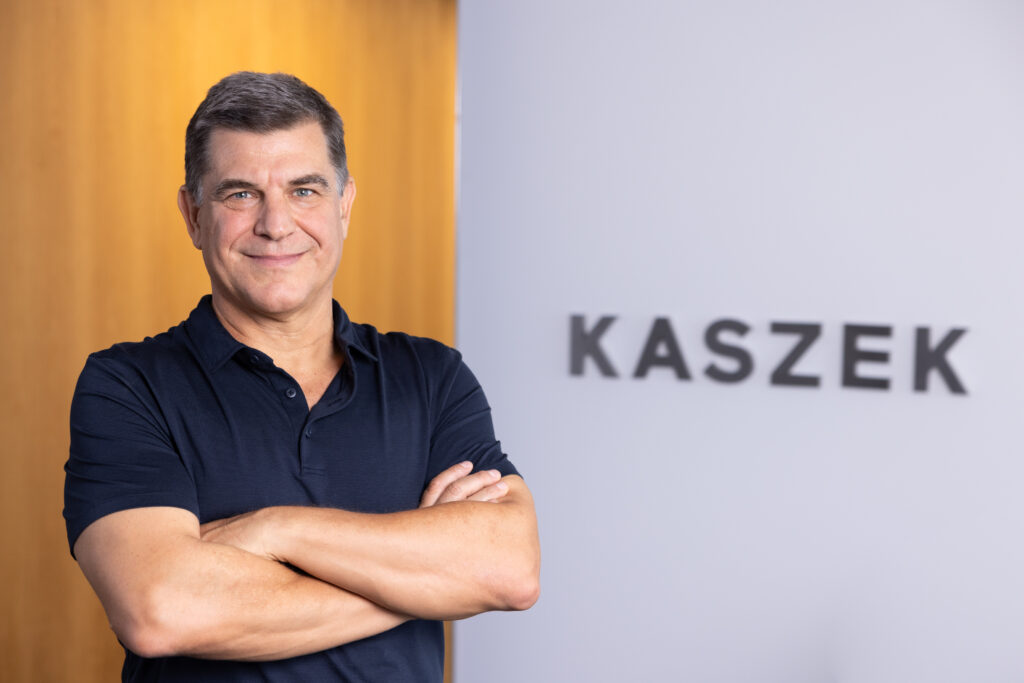
Executive: Nicolás Szekasy
Member Name: Kaszek
Year Founded: 2011
Offices: São Paulo, Mexico City, Montevideo
AUM: USD3b
LAVCA: Kaszek was founded in 2011 and has become one of the most prominent venture capital firms in Latin America. Looking back, what were the pivotal moments that shaped the firm’s trajectory and investment philosophy?
Nicolás Szekasy: We founded Kaszek in 2011, but the story really starts more than 25 years ago. Kaszek would not exist without my time at MercadoLibre. I joined as CFO in the early 2000s and led the Nasdaq IPO in 2007, which made my profile more visible. After that, I began receiving almost daily emails and calls from entrepreneurs who were seeking advice, and, in most cases, capital. It quickly became evident that there was a significant gap: exceptional founders were building high-potential companies, yet there was virtually no venture capital available to help them scale. That’s when the idea of launching a dedicated venture platform began to take shape.
Hernan Kazah and I left MercadoLibre and started Kaszek in 2011. At the time, only a few hundred million dollars were invested in tech across Latin America each year. We raised USD100m for our first fund with the vision of backing extraordinary entrepreneurs building companies across Latin America around strong global tech secular trends. When we raised our most recent vehicle, Fund VI, we revisited our original 2011 pitch deck, and we confirmed that not much had changed in our strategy. The same mission has guided us from the very beginning.
What has changed most materially is the depth and breadth of talent in Latin America. Back in 2011, there were relatively few founders. Today, there is a much larger pool of high-quality entrepreneurs with stronger networks, deeper experience and bigger ambitions. We now see second-time founders, as well as people who have worked at multiple startups spinning out to address specific pain points and opportunities. They have the desire, the skills and the colleagues to build with. It’s clear, empirical proof of the ecosystem’s maturity and of a virtuous cultural shift toward entrepreneurship and innovation.
As investors, we have our own views and mappings on where the market is headed, but ultimately founders are the ones in the driver’s seat. They define which sectors they will operate in. In our early days, we mostly backed B2C fintechs, e-commerce marketplaces and SaaS companies. Later, we moved into B2B fintech, infrastructure fintech and crypto. Today, there is a strong concentration of AI-native companies. We believe enormous amounts of value will be created around AI. The challenge will be identifying the right opportunities within all the noise.
How has fundraising evolved over time?
At the beginning, we had to convince investors to take a leap of faith in our transition from operators to investors. Not every operator makes a good investor, and at that point, there was no proof that we could make that shift successfully. Most of our initial capital came from the MercadoLibre ecosystem, including ourselves, former colleagues, early investors and a few relationships in Silicon Valley.
By Fund II, we had demonstrated strong early traction, with companies showing product–market fit, revenue growth and market validation. By Fund III, we had achieved some meaningful exits and liquidity. By Funds IV, V and VI, the focus had shifted to track record — and we were able to show tangible value creation and material distributions to LPs. In the end, performance is always the ultimate signal.
Our LP base also evolved. The first fund was mainly comprised of friends and family, with some institutions joining toward the end. As we scaled, we intentionally brought in more institutional investors, particularly philanthropic foundations and endowments. This aligns the team around maximizing financial returns for mission-driven institutions.
Today, our LP base is global, spanning Latin America, North America, Europe and Asia. We feel a strong responsibility to appreciate the capital entrusted to us. That means producing distributions without forcing liquidity. Companies have a natural rhythm, and value creation takes time.
How are you approaching the training and development of the next generation of partners and investment professionals within Kaszek?
On day one, it was just Hernán and me. From the outset, though, we envisioned building a firm that would endure for decades, which meant laying the right foundations early on.
Over time, we brought in associates, some of whom stayed and grew into partners. Others left to become entrepreneurs or operators within portfolio companies — a natural and positive evolution in our view. Our goal has always been to stay deeply embedded in the market, speaking with 100% of the relevant companies. Achieving that requires a strong, locally grounded team.
We’ve also built a dedicated growth team that supports portfolio companies across talent, technology, marketing and distribution — focusing in recent years almost exclusively on AI implementation. Although we remain a relatively small team and everyone wears multiple hats, we are very intentional about putting in place the building blocks for continuity.
When we invest — typically at the Seed, Series A or Series B stage — we always take a board seat. We aim to be leading board members, but that role must be earned over time. Founders inevitably face complex dilemmas, and our job is to help them think through those decisions. That kind of dialogue depends on mutual trust and respect.
You recently finalized your tenure as Chair of LAVCA’s Board. What reflections do you have on that experience?
LAVCA is a very entrepreneurial organization. It’s remarkable how much it accomplishes with relatively limited resources. Research has become the industry benchmark, and the association plays a critical role in educating the market and bringing investors together through its events and programming.
One of the most important things LAVCA does is act as a bridge, connecting global investors with opportunities in Latin America. That role will remain critical in the years ahead. Personally, it was an honor to serve as Chair over the last six years, and I truly enjoyed the experience.
As you look ahead, what are the defining themes for Kaszek and for Latin American venture capital over the next decade?
Our mission is to identify exceptional founders and help them build generational companies. Some in our portfolio have already proven this is possible. Others are still on the journey, and we’re optimistic about what’s to come.
Companies like MercadoLibre and Nubank are not only the leading corporations in Latin America, but they also rank among the world’s most valuable and influential technology companies. That’s proof that Latin American startups can achieve world-class scale and impact. It’s also becoming harder to attribute companies to a single geography. Some Latin American founders are building abroad, while international founders are coming to Latin America. The lines are blurring, and that’s a positive sign of a maturing, interconnected ecosystem.
Right now, AI is central. Companies betting on foundational model infrastructure and platforms are naturally capital intensive and concentrated in the U.S., but the application layer offers immense opportunity in Latin America. Many of our most recent investments are AI-centered — some AI-native, others integrating AI into their models. Some companies that are being started now in the region will be worth hundreds of billions of dollars in 20 years.
Kaszek will continue supporting the development of the region’s ecosystem, which we see as key to entrepreneurship, value creation and economic growth.
You may be interested in...
-
Lilianne Brunstein, Organización Corona VC
Executive: Lilianne Brunstein Member Name: Organización Corona VC Year Founded:...
-
Jerónimo Bosch, Grupo Pegasus
Jerónimo Bosch of Grupo Pegasus speaks on the firm’s evolution from its early venture...
-

Claudia Arango, Exagon Impact Capital
Claudia Arango of Exagon Impact Capital on shifting to renewables, raising an impact...
-
Maria Tereza Azevedo, SoftBank Group
Executive: Maria Tereza Azevedo, Investment Director Member name: SoftBank Group Year...