Member Profiles
Jerónimo Bosch, Grupo Pegasus
17 September 2025
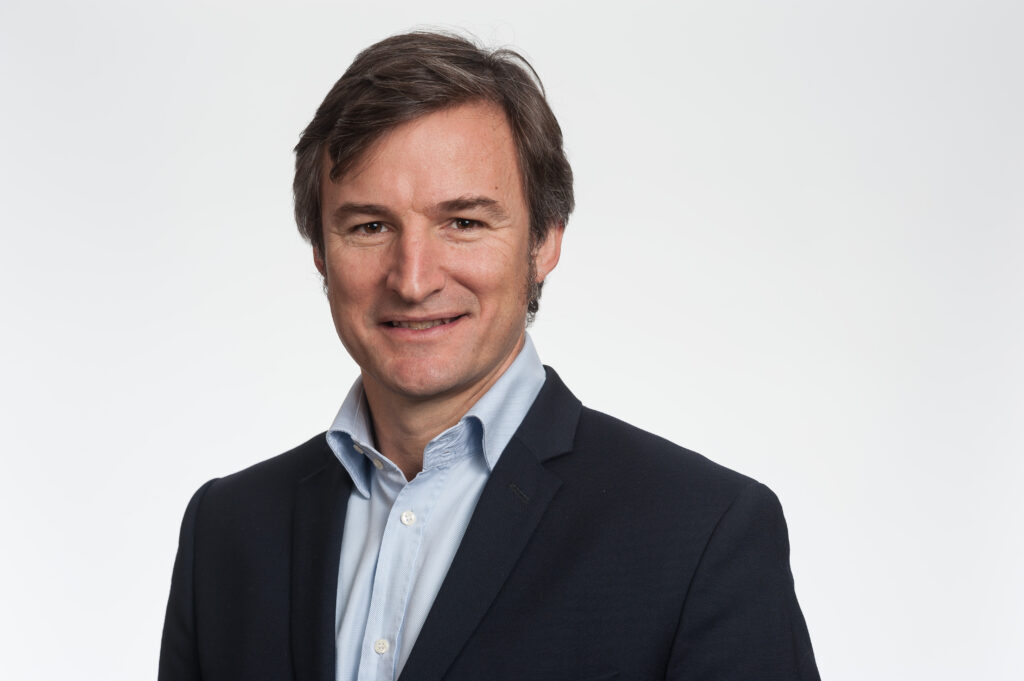
Executive: Jeronimo Bosch
Member Name: Grupo Pegasus
Year Founded: 2000
Offices: Buenos Aires and Bogota
LAVCA: Pegasus is celebrating 25 years. How has the firm evolved since its founding?
Jerónimo Bosch: When Pegasus was launched in 2000, it initially focused on VC. At that time, however, VC was an underdeveloped asset class with few players, small scale and limited follow-on capital. Recognizing these challenges, we transitioned toward a broader private capital model, expanding into private equity and private real estate.
Rather than raising traditional blind-pool funds, Pegasus structured club deals with local investors, and later with regional and institutional investors. Over time, we learned that traditional PE models are difficult to sustain in Latin America because liquidity windows are uncertain. Closed-end fund structures can sometimes lead to suboptimal investment or exit decisions. We chose to use special purpose vehicles, allowing us to take advantage of attractive entry points, take a long-term view and avoid forcing liquidity events during difficult market contexts.
This flexibility has positioned Pegasus as a long-term local partner for global investors. We are not a fund manager in the traditional sense, but rather a business platform with hands-on involvement. For example, when we identified a lack of institutional participation in real estate, we partnered through joint ventures with Blackstone, Equity International and Goldman Sachs Merchant Banking.
Fundraising in the region requires balancing global and local capital. How has the LP base evolved in Latin America?
In the early years, we worked primarily with local families in Argentina who had sold their companies and wanted to reinvest in real assets and operating businesses. Over time, we broadened our investor base to include families from across the region as well as international investors. We also partnered with large investment banks deploying proprietary capital into Latin America, but many of those institutions retreated after the 2008 financial crisis.
In recent years, family offices have grown larger and more sophisticated. Many have in-house teams and increasingly prefer to cherry-pick opportunities rather than commit to blind-pool funds. Importantly, they seek long-term alignment in building businesses, in addition to financial returns. Our evergreen partnership with a European family office illustrates this shift: the structure has enabled us to back high-growth, sustainable businesses with agility in both decision-making and execution. This approach allows us to deepen our understanding of the businesses, assess their potential and then bring in additional investors as capitalization opportunities arise.
Latin American private capital remains underrepresented in global portfolios, but we’re seeing more openness in conversations with investors. It’s not an ‘all-in’ play, but rather part of a diversification strategy. The region has critical resources and a role to play globally. That interest hasn’t yet translated into significant flows, but the dialogue is warming up.
What drove Pegasus’s geographic expansion in Latin America, particularly into Colombia?
We had a regional mindset from our early days. Following the macro crisis of the early 2000s, Argentina presented significant opportunities, but as conditions for institutional capital later became more challenging, we looked to diversify beyond the country.
Colombia emerged as a natural fit, offering the right scale, a demographic dividend and GDP stability. We began exploring the market in 2012 and entered a joint venture with Ospinas, a leading local developer, to launch a vehicle focused on large-scale commercial real estate. Blackstone later joined the platform, and in 2014, Hernando Forero came on board to lead our Colombia office.
Since then, we’ve built a diversified portfolio across Argentina and Colombia, spanning retail, healthcare, agribusiness, financial services and real estate. Some of our investments include Farmacity, ARG Realty, Puppis, Viajero Hostels, Caluce / Habitat, Blush Bar, Instaleap and Freddo.
Pegasus recently launched a platform for senior living in Colombia. How are you approaching this opportunity?
We identified a clear demographic trend: accelerated growth of the 65+ population, with unmet housing and care needs in Colombia. To address this, we acquired a small operator, Caluce, with 40 beds, and used it as a foundation to scale. The growth has been anchored by our evergreen fund, complemented by capital raised from both international and local investors through a Colombian FCP structure.
Since then, we’ve built three facilities from scratch, adding more than 300 beds and last year we acquired Habitat in Medellín. Today, the platform has 700 beds, and we’re about to open a new 120-bed facility in Suba, northwest Bogotá. We continue to see opportunities not only in other Colombian cities, but also in additional countries across the region.
The senior living platform reflects a broader Pegasus approach: identify unmet demand and execute at scale around themes with strong fundamentals and low correlation to macro cycles. With Viajero Hostels, for example, we started with just a couple of locations in Colombia and Uruguay. Today, the platform has grown to 28 hostels across seven countries. Another example is ARG Realty, established as a continuation of a real estate fund with a local developer, which evolved into a multi-asset platform with significant operational and financial synergies.
In your view, what sets Pegasus apart in its ability to navigate cycles and create long-term value in the region?
Pegasus is independent, run and owned by its partners. That independence gives us agility, flexibility and strong alignment with investors. We are deeply committed to Latin America, with more than 25 years of experience and a cohesive team dedicated to executing and managing businesses in the region.
We’ve also discovered powerful synergies between real estate and operating businesses. While in other regions these are treated separately, we see significant benefits when combined. Real estate provides resilience during downturns, while operating businesses create upside potential. This integrated approach has proven both defensive and offensive, with family offices particularly valuing it.
Latin America requires adapting to cycles, partnering locally and taking a long-term view. The region offers opportunities across asset classes, development stages and alternative structures. Our flexibility allows us to selectively capture value for investors, while prudence in the use of debt has enabled us to navigate volatility effectively.
Despite the risks, the fundamentals make Latin America a compelling diversification play. For investors with the right mindset, the next decade will bring significant opportunities for those with the experience and resources to execute.
You may be interested in...
-
Lilianne Brunstein, Organización Corona VC
Executive: Lilianne Brunstein Member Name: Organización Corona VC Year Founded:...
-
Nicolás Szekasy, Kaszek
Nicolás Szekasy of Kaszek shares insights on the firm’s evolution since its founding...
-

Claudia Arango, Exagon Impact Capital
Claudia Arango of Exagon Impact Capital on shifting to renewables, raising an impact...
-
Maria Tereza Azevedo, SoftBank Group
Executive: Maria Tereza Azevedo, Investment Director Member name: SoftBank Group Year...