Tech Spotlights
Scaling Access to Public Health in Latin America: In Conversation with Mamotest and MSD
10 September 2025

Mamotest was initially established in Argentina to expand access to timely breast cancer screening. The company has since evolved from a tele-mammography network in Argentina to incorporate BolderAi, a cloud platform for AI-assisted, multi-modality imaging diagnostics operating in Argentina, Mexico and Spain, with advanced discussions underway in Brazil and other markets.
The model combines regulated cloud infrastructure, subspecialist routing and public-private delivery to return radiology results in less than 24 hours, and in Spain, has shortened diagnosis timelines by about one month.
Mamotest last raised equity financing from global healthcare names in 2023, including MSD (known as Merck in the United States and Canada), Johnson & Johnson and Philips Foundation.
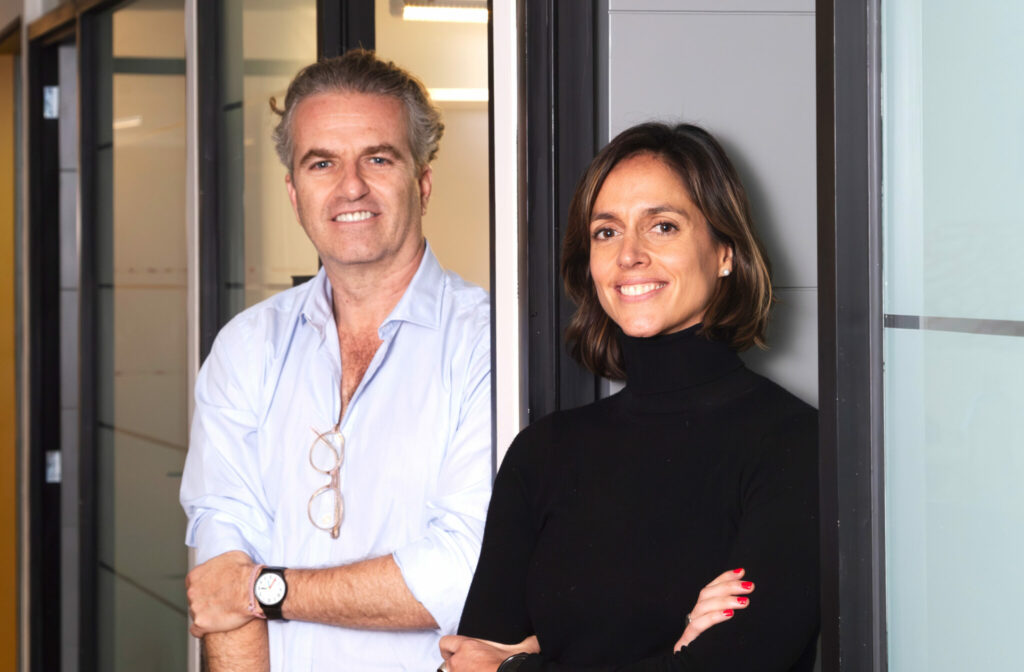
LAVCA sat down with Guillermo Pepe, CEO of Mamotest, and Ken Gustavsen, Managing Director of MSD’s Impact Venture Fund, to talk about what it takes to scale equitable diagnostics across fragmented health systems.
LAVCA: You launched Mamotest to democratize access to early breast cancer diagnosis. How has that original mission evolved as you have expanded across markets?
Guillermo Pepe: We began as a tele-mammography network connecting underserved clinics in Argentina with specialist radiologists. As we scaled, it became clear that access alone would not change outcomes. We needed efficiency, interoperability, and the ability to embed into public systems.
That led us to build BolderAi, a cloud platform that supports multiple imaging modalities, from mammography to CT and MRI. The platform is live in Mexico across IMSS and private networks, and in Spain’s public system, where we are growing at roughly 20% month over month. Entering Spain was intentional. Revenue growth strengthens the company and allows us to re-accelerate Latin America with a more robust operational and financial base. We are also in advanced negotiations in Brazil with major hospital chains.
Mamotest’s delivery model hinges on public-private collaboration. What have you learned about making those partnerships work in practice?
The hard part is aligning incentives and operating within different regulatory and budget cycles. Technology helps, but adoption can lag for economic and cultural reasons. The unlock has been measurable performance. In Spain, we reduced public patient imaging diagnosis times by about one month. When you can point to a specific improvement in time to result and patient flow, ministries and payors are more willing to adopt. That evidence has opened doors in Latin America and with private insurers that want efficiency without compromising quality.
You commit to returning imaging results in under 24 hours. What enables that service level as you scale?
It is a combination of talent, workflow and infrastructure. On the cloud side, intelligent case routing connects each study to the most qualified subspecialist in real time. Automation handles repetitive tasks like data capture and report structuring. We invest in training and protocols so that teams across partner clinics operate to the same standards. Clinical oversight is non-negotiable, which is how we maintain speed without trading off accuracy or trust.
How are you using AI today, and what will change over the next two to three years?
Pepe: Today AI supports triage, anomaly detection and structured reporting across modalities. In Spain, Argentina and Mexico, it already prioritizes high-risk cases and standardizes the way findings are recorded.
Over the next two to three years, we expect AI to become predictive. With millions of anonymized cases, we can build personalized risk profiles from a patient’s first interaction and guide follow-up more precisely.
Even as that capability matures, diagnostics remain both technical and human. We pair algorithmic support with clinician judgment and clear guidance for patients and providers.
You have raised capital from global health investors such as Merck. How has that shaped your growth strategy?
Pepe: These relationships brought more than funding. They provided credibility with health systems, connections with key stakeholders in the healthcare ecosystem and a higher bar for regulatory and operational rigor. That has helped us expand in Spain, consolidate operations in Mexico and prepare for Brazil and other Latin American markets. The collaboration also informs our product roadmap, particularly where AI, workflow and interoperability intersect.
Which performance signals resonate most with technology investors, and where do you spend time educating them on the model?
Pepe: Investors tend to focus on the reliability of the 24-hour turnaround at scale, the pace of adoption in Spain, where we are growing about 20% month over month, and evidence that the model improves public health delivery, such as the one-month reduction in diagnosis timelines. Many also pay attention to our marketplace dynamics that match institutional demand with subspecialist supply. The education is usually around the economics of public-sector work. There is an assumption that public contracts are slow and thin-margin. Our experience shows that, with the right infrastructure and workflow, public contracts can be both defensible and profitable. A hybrid approach, with public in Europe and mixed models in Latin America, reduces risk while maintaining impact.
Ken, what first drew MSD to partner with Mamotest, and how did you build conviction around the 2021 investment?
Ken Gustavsen (MSD): Mamotest had a demonstrated approach to a significant health challenge: delivering timely, high-quality breast cancer diagnostics to women who would otherwise wait too long for screening and results. The combination of telemedicine with centralized image reading results in less than 24 hours. When we engaged in 2021, the company was at a stage where additional capital could be catalytic. It would support expansion beyond Argentina, entry into new markets and integration of AI to improve accuracy and follow-up. The intersection of impact, technical innovation and readiness to scale made the partnership compelling.
How does the partnership fit within MSD’s broader view of innovation for emerging markets?
Gustavsen: Through our Impact Venture Fund, we invest in companies and funds addressing unmet needs in low- and middle-income countries, increasingly with digital and AI capabilities that can help overcome access constraints. In settings where specialists and infrastructure are scarce, AI can triage cases, shorten time to diagnosis and support continuity of care. With Mamotest, algorithms can flag potentially abnormal mammograms for priority review, and access to related medical records allows physicians to review past results, enabling more informed and accurate decisions. The model shows how technology, paired with trusted local partnerships, can expand access to essential services in underserved contexts.
You may be interested in...
-

Scaling AI in Latin America: A Conversation with Franklin Luzes of Microsoft
LAVCA sat down with Franklin Luzes of Microsoft Digital Natives to discuss the way in...
-

From Belief to Breakouts: In Conversation with Endeavor Catalyst
Endeavor Catalyst just launched its fifth flagship fund with a USD300m target. LAVCA sat...
-

Caravela Capital Backs OCN
LAVCA sat down with Caravela Managing Partner Lucas Lima and OCN Founder & CEO Mairon...
-
Is AI a Thing in Latin America? In Conversation with Hi Ventures
LAVCA sits down with Hi Venture to discuss their evolving thesis and vision for...